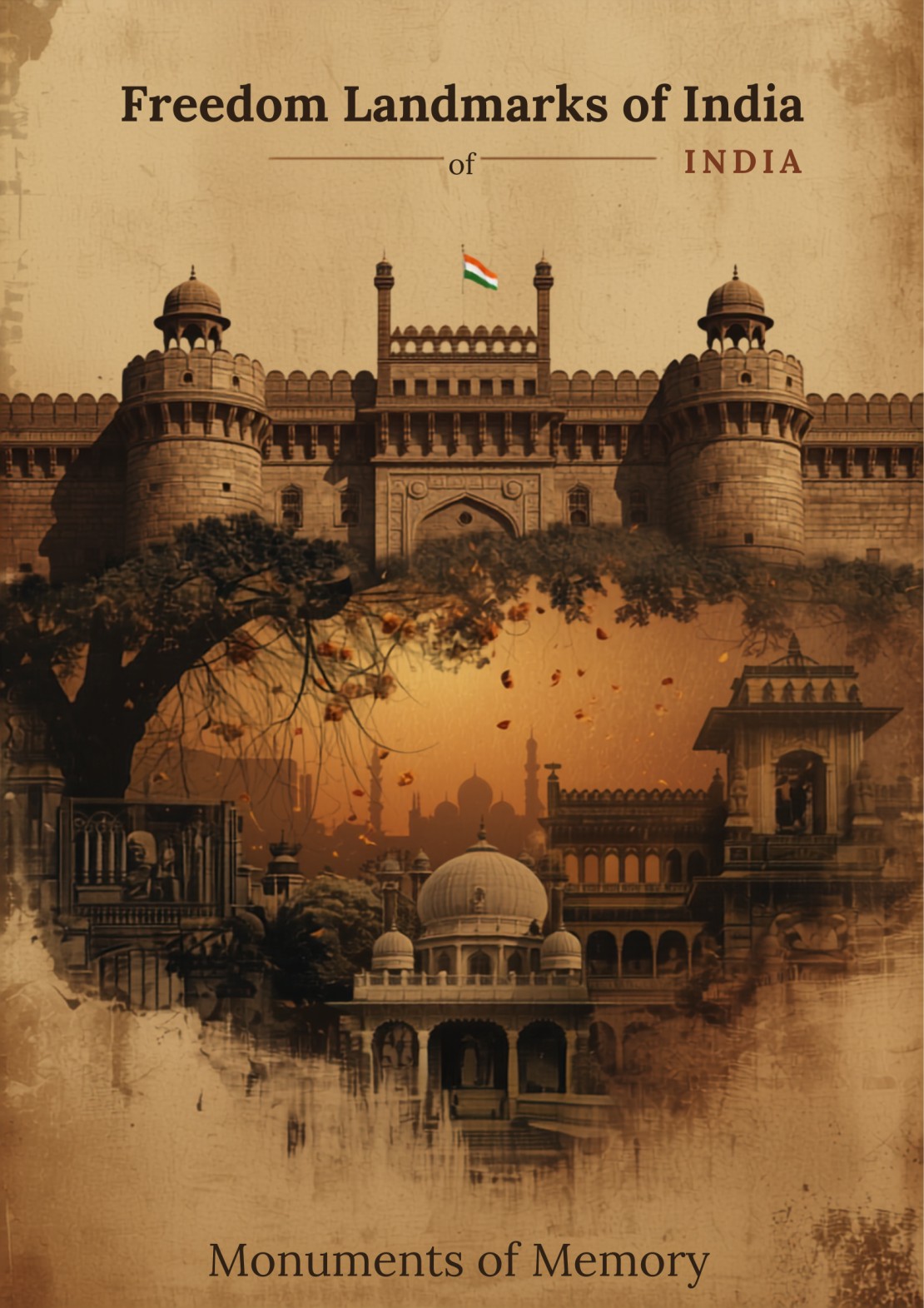
Swapna Kumbar , Bengaluru - Across India, certain places carry more than history, they carry memory. Forts that witnessed rebellion, gardens that hold grief, homes that became war rooms for a movement.
Red Fort, Delhi
The Red Fort holds a unique place in India's history, serving as one of the key centers of the 1857 revolt against British rule, when rebel forces rallied around the fort as a symbol of resistance to colonial power. More than any of its historical roles, though, the Red Fort is remembered today for what happens there every August 15th: the Prime Minister of India hoists the national flag from its ramparts and addresses the nation, a tradition that has continued since independence in 1947. It stands today as both a monument to India's imperial past and a living stage for its democratic present.
Jallianwala Bagh, Amritsar, Punjab
Jallianwala Bagh is a public garden that carries the weight of one of the darkest days in India's colonial history. On April 13, 1919, British troops under General Dyer opened fire on an unarmed crowd gathered peacefully for a public meeting, killing hundreds and wounding many more. Today, the garden stands as a memorial, its walls still bearing bullet marks from that day, and a well within its grounds serves as a somber reminder of those who died trying to escape the gunfire. The massacre marked a turning point that hardened India's resolve for complete independence.
India Gate, New Delhi
Standing 42 meters tall in the heart of New Delhi, India Gate is a war memorial originally built to honor the roughly 70,000 Indian soldiers who died fighting for the British Indian Army during World War I. The monument bears the names of thousands of soldiers inscribed on its walls. Over the decades, India Gate has come to represent the sacrifice of Indian soldiers across multiple conflicts, and it remains one of the most visited landmarks in the capital, a place where the nation continues to honor those who gave their lives in service.
Swaraj Bhawan / Anand Bhawan, Prayagraj, Uttar Pradesh
Once the Nehru family's ancestral residence, Anand Bhawan became far more than a home — it evolved into a nerve center for the Indian National Congress during the freedom struggle, hosting strategy meetings, political discussions, and gatherings of key leaders. An adjoining building, Swaraj Bhawan, was donated by Motilal Nehru to the Congress Party and served as its headquarters for a period, playing host to significant moments in the planning of the independence movement. Today, both buildings function as museums, preserving the legacy of the Nehru family's deep involvement in India's fight for freedom.
Sabarmati Ashram, Ahmedabad, Gujarat
Founded by Mahatma Gandhi in 1917, Sabarmati Ashram served as his residence and the operational base for the freedom movement for over a decade. It was from this ashram, on March 12, 1930, that Gandhi set out with a small group of followers on the historic 240-mile Dandi March to break the British salt laws, launching the wider Civil Disobedience Movement. Today, the ashram stands as a museum and memorial, preserving Gandhi's living quarters and personal artifacts, and continuing to draw visitors from around the world who come to understand the roots of his philosophy of nonviolent resistance.
August Kranti Maidan, Mumbai, Maharashtra
On August 8, 1942, Mahatma Gandhi stood at this ground in Mumbai, then known as Gowalia Tank Maidan — and delivered his call for the Quit India Movement, urging Indians to "Do or Die" in the final push for independence. The site was later renamed August Kranti Maidan, meaning "August Revolution Ground," in honor of that pivotal speech. It remains a public park today, a quiet green space that carries the memory of the moment India's freedom movement entered its final, decisive phase.
Gateway of India, Mumbai, Maharashtra
Originally built to commemorate the 1911 visit of King George V and Queen Mary, the Gateway of India took on a very different historical significance decades later. On February 28, 1948, it became the site where the last British troops ceremonially departed India, marking a symbolic close to nearly two centuries of colonial presence. What was built as a monument to British royalty ultimately became the backdrop for the empire's final exit a striking twist in the landmark's history.
Aga Khan Palace, Pune, Maharashtra
During the Quit India Movement of 1942, the British used the Aga Khan Palace in Pune as a detention site for Mahatma Gandhi and several other senior Congress leaders, including his wife Kasturba Gandhi, who died there in 1944 during her imprisonment. Gandhi himself was held at the palace for nearly two years. The building, originally constructed by Sultan Muhammed Shah Aga Khan III, now stands as a memorial and museum, housing relics from Gandhi's imprisonment and serving as a poignant reminder of the personal sacrifices made during the final years of the freedom struggle.
Jhansi Fort, Jhansi, Uttar Pradesh
Jhansi Fort was the stronghold of Rani Lakshmibai, the warrior queen who became one of the most iconic figures of the Revolt of 1857. When the British attempted to annex her kingdom under the Doctrine of Lapse following her husband's death, Lakshmibai refused to surrender, instead leading her forces in fierce resistance from within the fort's walls. She was ultimately killed in battle, but her courage — reportedly fighting with her infant son strapped to her back — turned her into an enduring symbol of resistance. The fort still stands today as a monument to her defiance.
Cellular Jail, Port Blair, Andaman & Nicobar Islands
Known as "Kala Pani," or "black water," the Cellular Jail was a remote colonial prison built by the British specifically to isolate and punish political prisoners far from the Indian mainland. Its solitary-cell design was intended to break the spirit of revolutionaries through extreme isolation, and it housed many prominent freedom fighters who endured brutal conditions, forced labor, and torture. Today, the jail stands as a national memorial, its cells preserved as a stark reminder of the price paid by those who resisted colonial rule.
Netaji Bhawan, Kolkata, West Bengal
Netaji Bhawan was the ancestral home of Subhas Chandra Bose, one of the most fiercely independent voices of the freedom movement. It was from this house that Bose made his dramatic escape in 1941, evading British surveillance to eventually form the Indian National Army and pursue an armed path toward independence from abroad. The house is now a museum dedicated to his life, preserving personal artifacts, photographs, and the room from which he slipped past British watch to continue his fight for freedom on his own terms.
Freedom Park, Bengaluru, Karnataka
Originally the site of Bengaluru's Central Jail, this location was used by the British to detain political prisoners and protestors during the freedom movement. After independence, the jail continued to operate for decades before finally being decommissioned and transformed into Freedom Park, a public space that preserves parts of the original jail structure as a memorial. Today, it stands as both a historical site and a venue for public gatherings and protests, carrying forward its legacy as a place associated with dissent and civic voice.

Zepto and Blinkit Under Scanner Over Alleged Food Safety Violations
Tata Sons Chairman N. Chandrasekaran Resigns Ahead of AGM, Company’s Shares Tumble

Everyday Essentials May Get More Expensive, FMCG Prices Likely to Rise
PM Modi and Other Leaders Wave the Tricolour at Mangal Milan Event

Fraud in the Name of Patients: 2,359 Hospitals Removed, 1,200 Banned

From a satellite built on a shoestring budget to a Mars mission that succeeded where many nations had failed, these firsts capture a nation that turned constraint into innovation.
Panchkula woman found dead maid suspected.
From an uprising that shook an empire to the leaders who built a republic in its image, these firsts trace the architecture of Indian democracy.
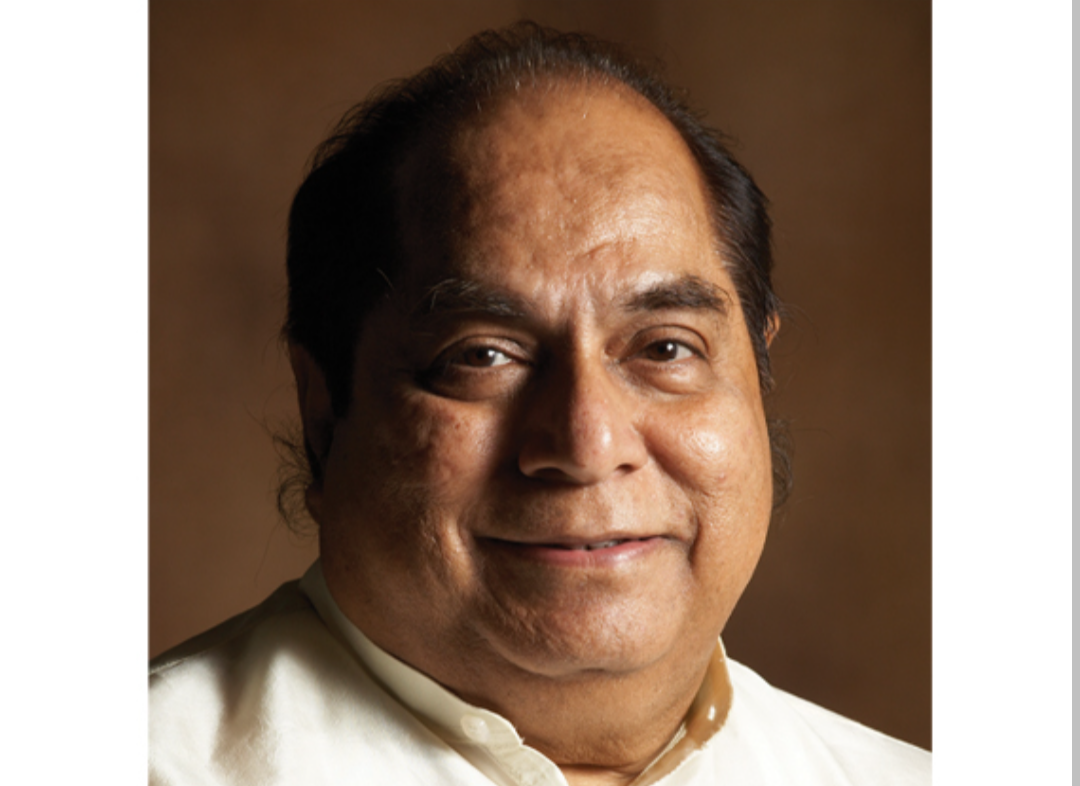
Former West Bengal Governor and educationist D Y Patil dies at 92.
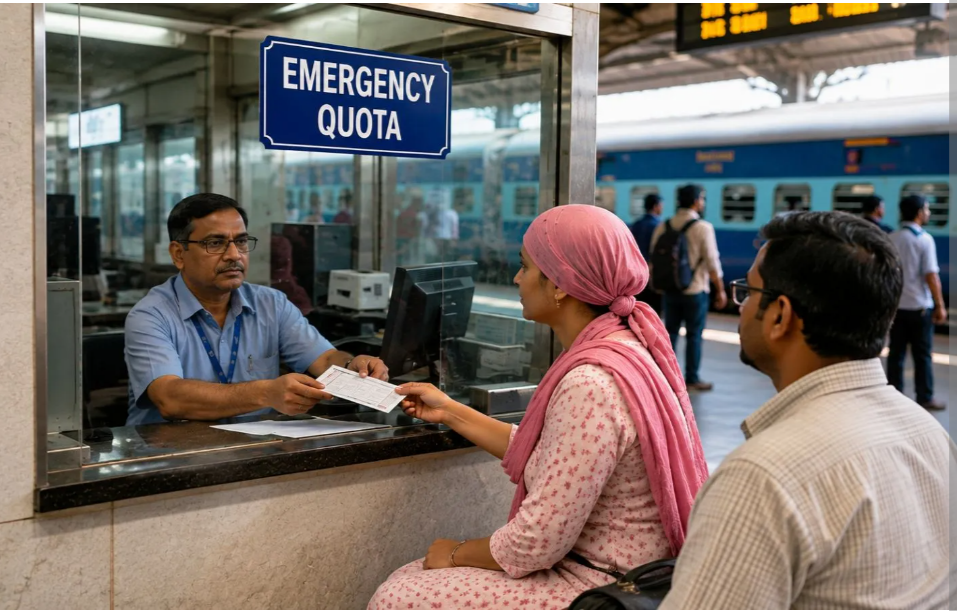
Indian Railways offers emergency quota tickets for cancer patients' urgent travel.
.jpg)
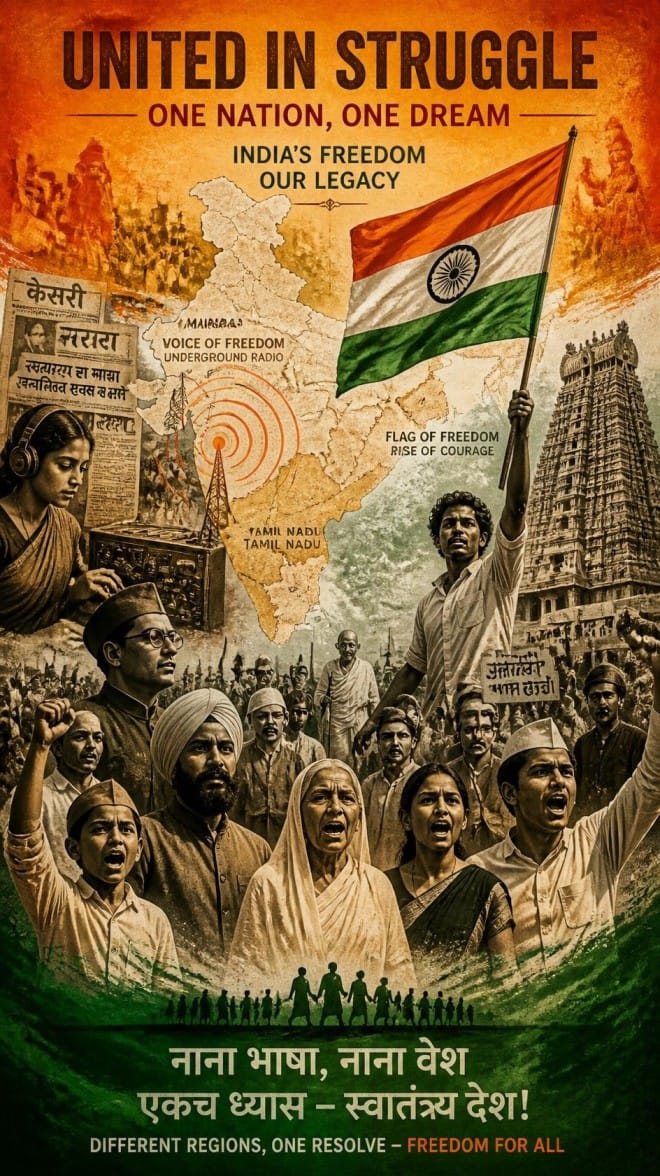
From underground radio waves in Maharashtra to a flag held high in Tamil Nadu, these stories remind us that resistance took root in every corner of the country, carried forward by people of every age and background. Join us tomorrow as this journey through India's freedom struggle continues
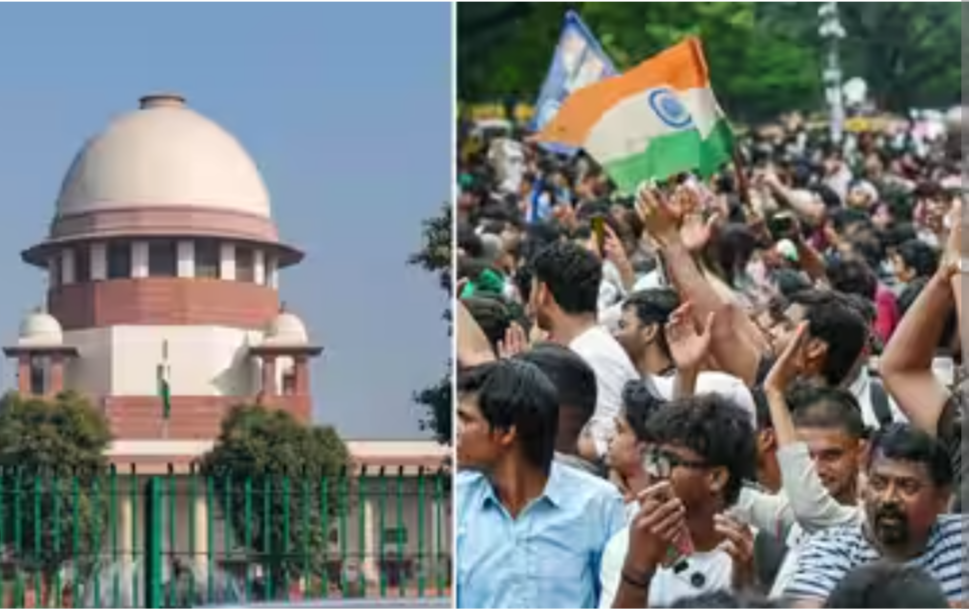
SC agrees to hear plea seeking an alternative to Jantar Mantar for protests.

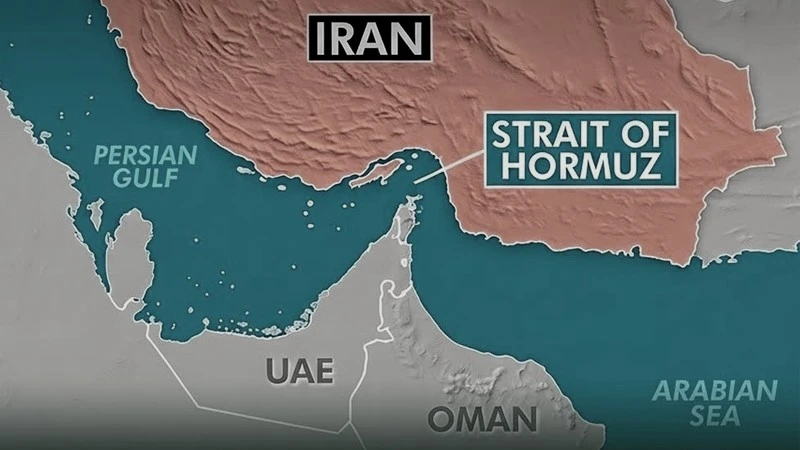
Iran, Oman and the U.S. are reportedly close to a Strait of Hormuz agreement tha...
.jpeg)
Fresh U.S. airstrikes in Iran reportedly killed 14 people, prompting Iranian ret...

President Donald Trump claimed he is Iran’s “No. 1 target” after security measur...
.jpeg)
Three people were killed in U.S. strikes in western Iran as tensions escalated f...

President Donald Trump said the Iran ceasefire is “over” following fresh U.S. st...