.jpeg)
News Desk - President Donald Trump delivered a blistering threat to Iran during the first round of peace talks in Switzerland, saying "You won't make it back to your f**ing country" if Iran attacked U.S. forces, while mediators Pakistan and Qatar announced that Washington and Tehran agreed to establish a "communication line" to prevent incidents in the strategically vital Strait of Hormuz.
The explosive warning came as Trump addressed the escalating tensions over the Strait of Hormuz, with Iran's closing of the waterway threatening global energy supplies and the U.S. military response. Trump stated that Iran's closing of the Hormuz Strait "never would have happened" if he was not president, and threatened that if Iran "attacks us, they're not going to attack a soft country, and they're not going to attack a country that's not going to defend itself," declaring "You won't make it back to your f**ing country". He also warned that the "Guardian Angel" tolls of 35% on Hormuz shipping would be "increased" if Iran hindered passage through the waterway.
Meanwhile, behind the confrontation, negotiators achieved a breakthrough: at the end of the first round of talks in Switzerland, mediators Pakistan and Qatar confirmed that Washington and Tehran agreed to establish a communication line (de-confliction cell) involving Lebanon to ensure the complete cessation of military operations, with the cell coordinated by Pakistan and Qatar to guarantee adherence to the termination of military operations. This agreement comes as negotiators enter a critical 60-day sprint to finalize the technical details of the 14-point Islamabad Memorandum of Understanding signed between Trump and Iran President Masoud Pezeshkian last week.
Trump's aggressive rhetoric underscores the high stakes of the Hormuz dispute, but the establishment of the communication line represents progress toward ending military conflict while negotiators advance toward finalizing the U.S-Iran deal.
.jpeg)
Trump cited India’s voter-ID system while backing the SAVE America Act, highlighting differences in voting rules between the two countries.
.jpeg)
A Russian missile strike hit Lakshmi Mittal-linked ArcelorMittal’s steel plant in Ukraine, killing two and injuring several others as the war escalates.
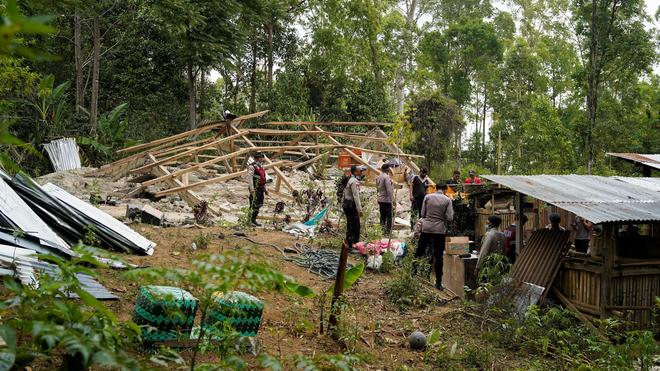
A powerful earthquake in Indonesia has killed 53 people and forced around 5,000 to evacuate, as aftershocks and landslides hamper rescue efforts.

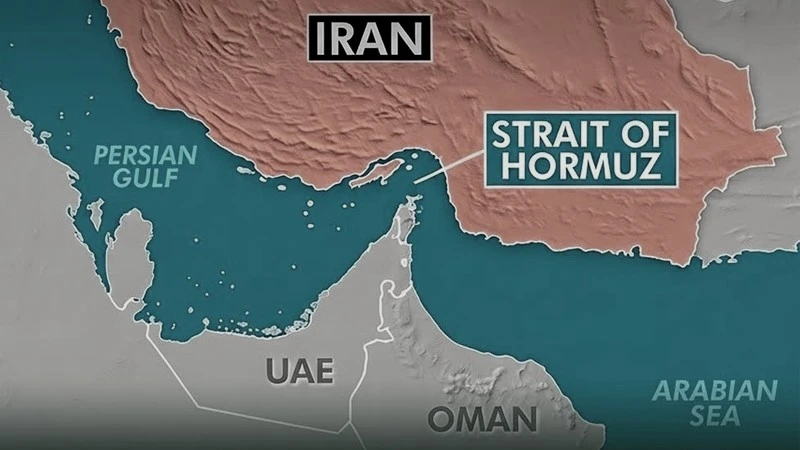
Iran, Oman and the U.S. are reportedly close to a Strait of Hormuz agreement tha...
.jpeg)
Fresh U.S. airstrikes in Iran reportedly killed 14 people, prompting Iranian ret...
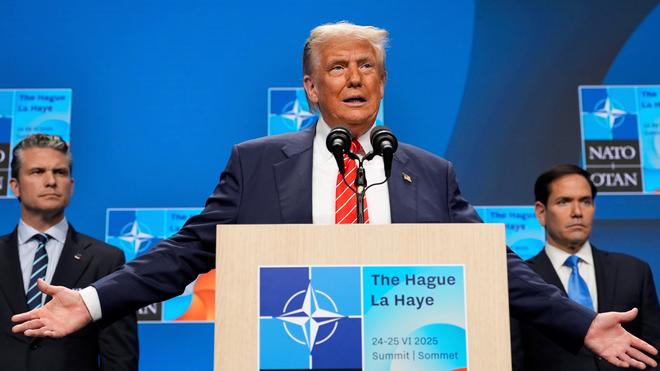
President Donald Trump claimed he is Iran’s “No. 1 target” after security measur...
.jpeg)
Three people were killed in U.S. strikes in western Iran as tensions escalated f...
President Donald Trump said the Iran ceasefire is “over” following fresh U.S. st...