.jpeg)
News Desk - The U.S. Senate approved a War Powers resolution for the first time to curb President Donald Trump’s military campaign against Iran, in what lawmakers described as a major rebuke and a dramatic reversal from earlier failed attempts.
The resolution directs the president to withdraw U.S. Armed Forces from hostilities against Iran unless Congress explicitly authorizes military action, while still allowing a response to an imminent attack on the United States or its allies. Four Republicans Bill Cassidy, Susan Collins, Lisa Murkowski, and Rand Paul joined nearly all Democrats in support, while Democrat John Fetterman voted no. According to reports, the measure now goes to the House, where a similar version had already passed, and other reports noted that the Senate’s approval came at a time when the U.S. and Iran were in the early stages of talks aimed at ending the war.
It was the 10th Senate attempt to stop the war, making the result a striking turnaround from earlier defeats, including votes that had failed in March and April. The measure is largely symbolic because War Powers resolutions do not require the president’s signature, but it still represents the first time the Republican-led Senate has voted to end the U.S. war with Iran. Reports also said the Pentagon is seeking around $80 billion from Congress, mostly to replenish munitions and stockpiles used in the Iran campaign, underscoring the scale of the conflict and the political pressure around it.
The vote marks a clear political rebuke to Trump, even if it may not by itself end U.S. military action against Iran. It also shows that opposition to the war has deepened enough to produce a successful Senate vote for the first time.
.jpeg)
Trump cited India’s voter-ID system while backing the SAVE America Act, highlighting differences in voting rules between the two countries.
.jpeg)
A Russian missile strike hit Lakshmi Mittal-linked ArcelorMittal’s steel plant in Ukraine, killing two and injuring several others as the war escalates.

A powerful earthquake in Indonesia has killed 53 people and forced around 5,000 to evacuate, as aftershocks and landslides hamper rescue efforts.

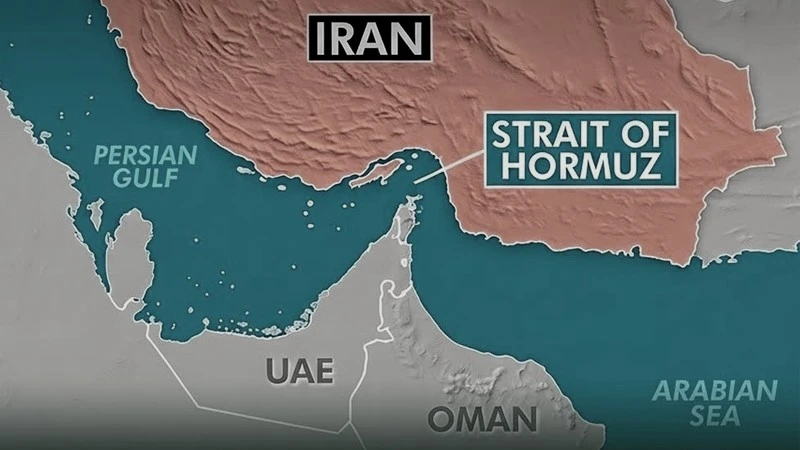
Iran, Oman and the U.S. are reportedly close to a Strait of Hormuz agreement tha...
.jpeg)
Fresh U.S. airstrikes in Iran reportedly killed 14 people, prompting Iranian ret...
President Donald Trump claimed he is Iran’s “No. 1 target” after security measur...
.jpeg)
Three people were killed in U.S. strikes in western Iran as tensions escalated f...
President Donald Trump said the Iran ceasefire is “over” following fresh U.S. st...