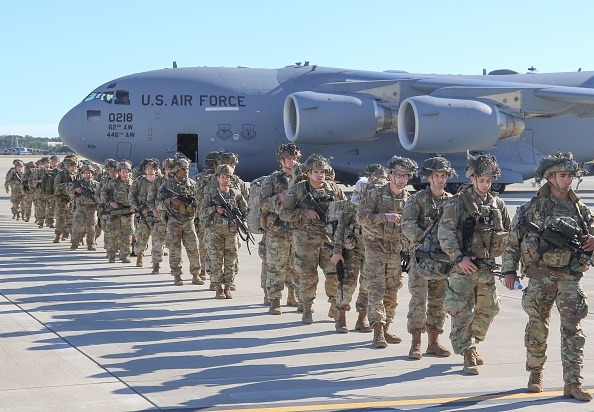
Desk Correspondent , Washington DC – History seems to repeat itself as Pentagon prepares to add troops in Iran. The potential locations are Kharg Island and coastal sites near the Strait of Hormuz. On top of the 1,500 troops already deployed an additional 10,000 ground troop are being considered. White House spokesperson Karoline Leavitt gave statement to reporters saying, “It does not mean the President has made a decision.”
Ever since the end of World War 2 USA have a history of invading other countries. US-based think tank Council on Foreign Relations’ Linda Robinson painted the situation as “The risks increase exponentially if US group forces are deployed to Iran. This is a scenario that US ground forces are deployed to Iran. This is a scenario that US military uniformed leadership has reportedly argued would incur very high casualties and likely risk failure.” Senator Richard Blumenthal one of the opposers of Trump said to the reporters “I emerge from this briefing as dissatisfied and angry, frankly, as I have from any past briefing in my 15 years,” after attending a classified Iran was briefing for the Senate Armed Services Committee.
Trump has used words like “swift” and “decisive” after US and Israel launched the attack on February 28. The same words are heard using during the attacks on Iraq (2003), Afghanistan (2001), Kosovo (1999), Somalia (1993), Vietnam (1965). Even before these major wars 36,000 American soldiers were killed fighting to defend south Korea after the communist regime of the North attacked in the early 1950s. Trump said Washington is trying to make negotiations but Tehran refuse to agree on meeting.
.jpeg)
Trump cited India’s voter-ID system while backing the SAVE America Act, highlighting differences in voting rules between the two countries.
.jpeg)
A Russian missile strike hit Lakshmi Mittal-linked ArcelorMittal’s steel plant in Ukraine, killing two and injuring several others as the war escalates.
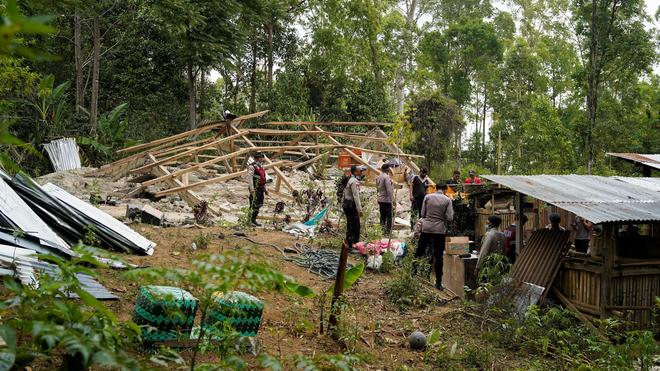
A powerful earthquake in Indonesia has killed 53 people and forced around 5,000 to evacuate, as aftershocks and landslides hamper rescue efforts.

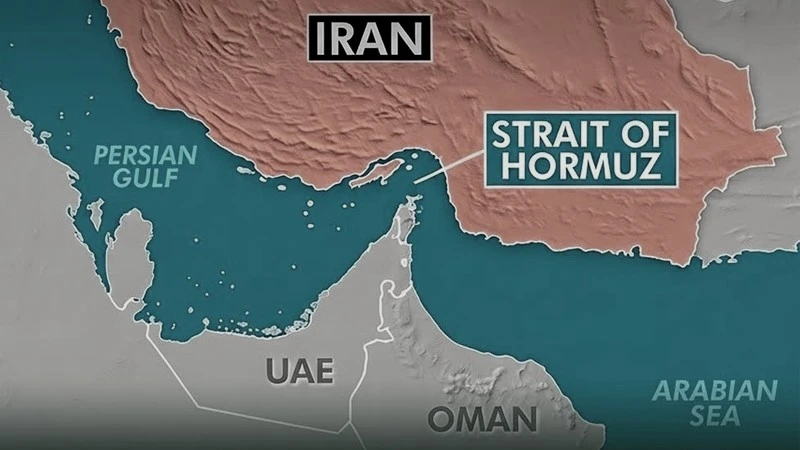
Iran, Oman and the U.S. are reportedly close to a Strait of Hormuz agreement tha...
.jpeg)
Fresh U.S. airstrikes in Iran reportedly killed 14 people, prompting Iranian ret...
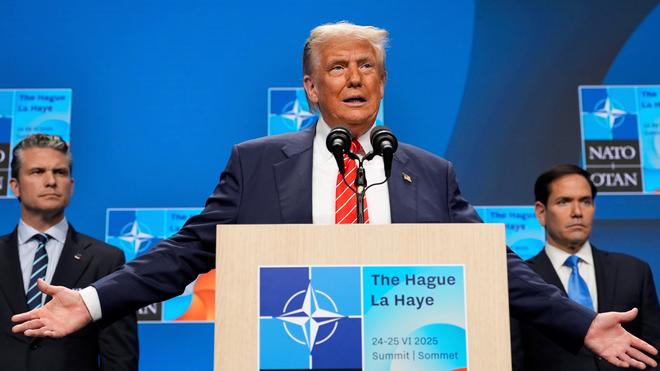
President Donald Trump claimed he is Iran’s “No. 1 target” after security measur...
.jpeg)
Three people were killed in U.S. strikes in western Iran as tensions escalated f...
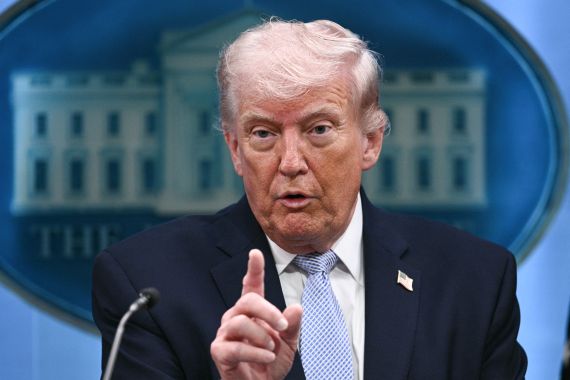
President Donald Trump said the Iran ceasefire is “over” following fresh U.S. st...