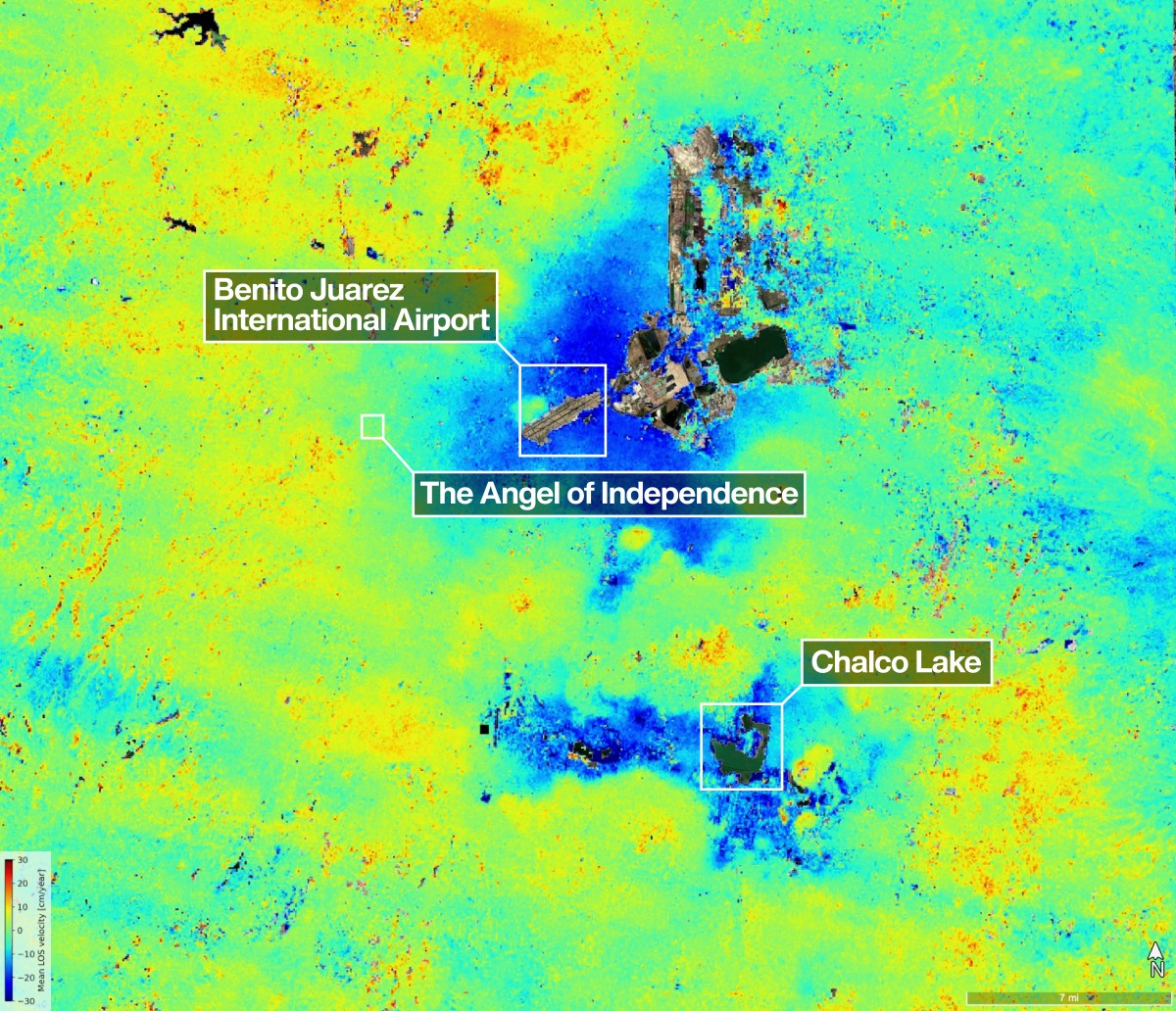
Swapna Kumbar , Bengaluru - A groundbreaking NASA-ISRO satellite mission, NISAR (NASA-ISRO Synthetic Aperture Radar), has produced the most detailed maps yet of extreme land subsidence in Mexico City, revealing sinking rates up to several centimeters per month in key areas. Launched in July 2025 from India's Satish Dhawan Space Centre, NISAR's L-band radar pierced clouds and vegetation to capture ground motion between October 2025 and January 2026, confirming the city's decades long battle with groundwater depletion.
The vibrant heat maps show subsidence hotspots (in blue) concentrated east and northeast of the city center, where excessive aquifer pumping compacts soft lakebed sediments beneath the 22 million person metropolis. Rates exceed half an inch monthly in places, accumulating to fracture roads, tilt buildings, and rupture water mains over time. NISAR's dual frequency radar (L-band from NASA/JPL, S-band from ISRO) delivers millimeter precision deformation tracking every 12 days, unaffected by weather proving its value for urban planning and disaster preparedness. Mexico City's subsidence, among the world's worst, stems from its geological misfortune: built on an ancient lakebed drained for Spanish colonial expansion, now overexploited for water. Previous radar missions documented the trend, but NISAR's higher resolution and revisit frequency offer real time monitoring critical as climate change and population growth exacerbate risks.
NISAR's Mexico City maps validate the mission's promise for global change detection, equipping authorities with data to prioritize infrastructure reinforcement and sustainable water management. As subsidence accelerates, this US-India partnership demonstrates space tech's power to safeguard vulnerable megacities from silent, creeping disasters.
.jpeg)
Trump cited India’s voter-ID system while backing the SAVE America Act, highlighting differences in voting rules between the two countries.
.jpeg)
A Russian missile strike hit Lakshmi Mittal-linked ArcelorMittal’s steel plant in Ukraine, killing two and injuring several others as the war escalates.

A powerful earthquake in Indonesia has killed 53 people and forced around 5,000 to evacuate, as aftershocks and landslides hamper rescue efforts.

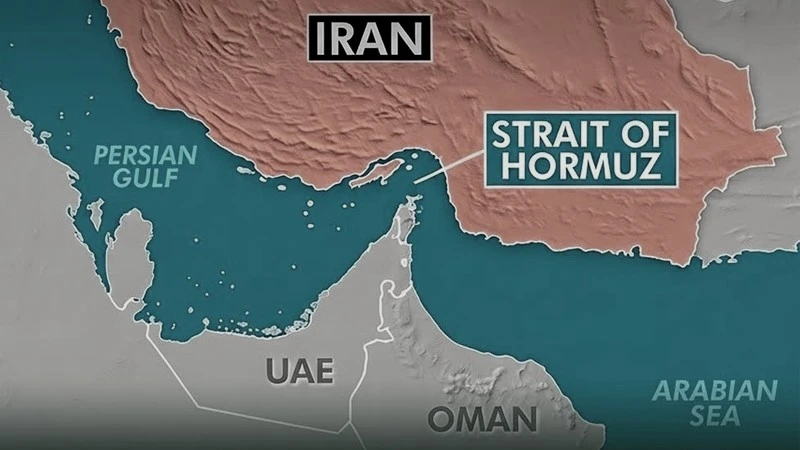
Iran, Oman and the U.S. are reportedly close to a Strait of Hormuz agreement tha...
.jpeg)
Fresh U.S. airstrikes in Iran reportedly killed 14 people, prompting Iranian ret...

President Donald Trump claimed he is Iran’s “No. 1 target” after security measur...
.jpeg)
Three people were killed in U.S. strikes in western Iran as tensions escalated f...

President Donald Trump said the Iran ceasefire is “over” following fresh U.S. st...