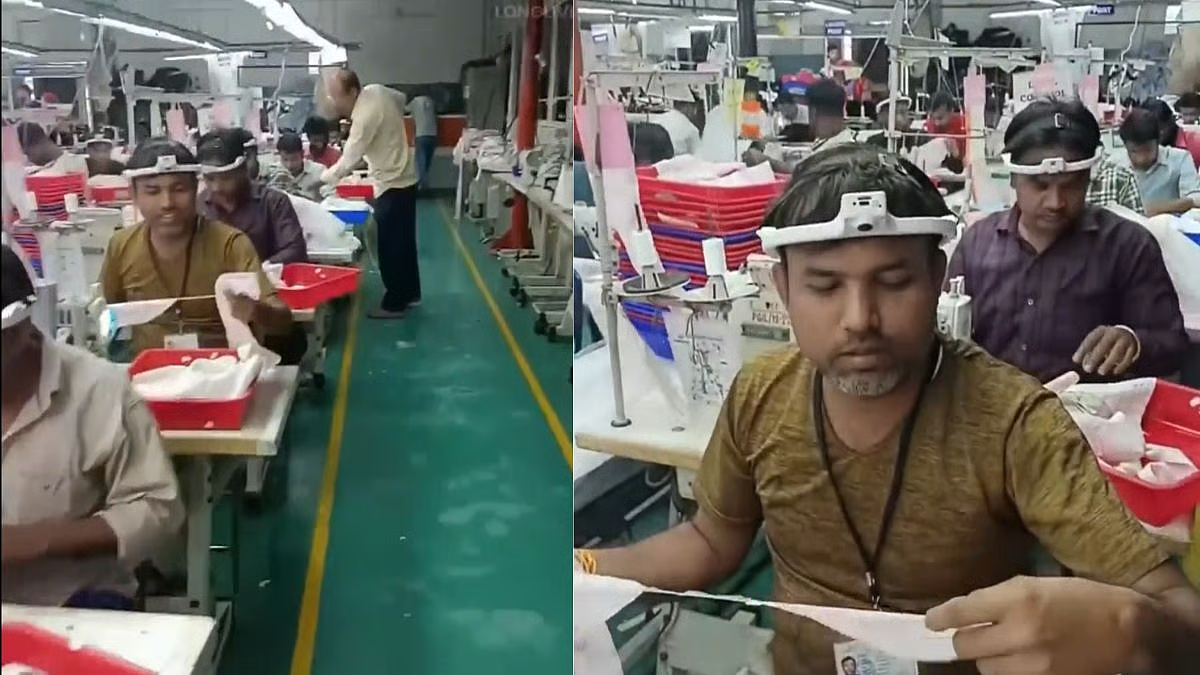
Swapna Kumbar , Bengaluru - A new wave of artificial intelligence development is quietly unfolding across India, where workers are being hired to help train robots capable of performing human tasks with increasing accuracy. From factory floors to warehouses and household environments, employees are wearing cameras, demonstrating movements, and recording first-person task data that AI companies use to teach machines how humans interact with the physical world. While the work offers temporary employment and income opportunities, many workers openly admit they worry the very systems they are helping build could one day eliminate the need for human labor altogether.
The growing practice centers around what technology firms call "egocentric data" first person recordings captured through wearable cameras and sensors that allow AI systems and robots to learn human actions from a human perspective. Workers are asked to perform routine activities such as sorting packages, cleaning surfaces, assembling products, opening doors, operating tools, and navigating indoor spaces while their movements are recorded in detail. These datasets are then used to train robotics systems designed for industries including logistics, manufacturing, healthcare, and home automation. Several global AI and robotics companies are increasingly turning to India because of its large workforce, lower operational costs, and expanding digital infrastructure.
However, the trend has also sparked ethical and economic concerns. Many workers involved in the training process reportedly understand that automation could eventually reduce demand for the same physical jobs they currently perform. Experts say the situation reflects a broader global shift where human labor is being used to accelerate the development of systems aimed at reducing dependence on human workers in the future. Labor analysts warn that while AI could create new categories of employment, millions of low skill and repetitive jobs worldwide may face long term disruption as robotics technology becomes more capable and affordable.
India’s role in training the next generation of AI-powered robots highlights both the opportunities and anxieties shaping the future of work. As companies race to build machines that can better understand and replicate human behavior, the debate over automation, worker protection, and the future relationship between humans and intelligent machines is becoming increasingly urgent across the world.

.jpeg)
Donald Trump has again claimed credit for the India-Pakistan ceasefire as part o...
.jpeg)
Fresh U.S. airstrikes in Iran reportedly killed 14 people, prompting Iranian ret...

President Donald Trump claimed he is Iran’s “No. 1 target” after security measur...
.jpeg)
Three people were killed in U.S. strikes in western Iran as tensions escalated f...

President Donald Trump said the Iran ceasefire is “over” following fresh U.S. st...