.jpg)
“Earth in Transition: The Story of a Changing Climate”
THE FORMATION
Before the Problem, Understand the System
Most climate conversations start with the crisis. This one begins with the planet itself. To truly understand why today’s climate change is so alarming, you first need to see how complex and self regulating Earth’s climate system has been for billions of years and how the changes we are now forcing on it compare to everything that came before. Earth is not a passive rock in space. It is an active, breathing system, oceans circulating heat, ice sheets reflecting sunlight, forests exhaling moisture, volcanoes releasing carbon, and tectonic plates slowly reshaping continents over millions of years. Climate is the product of all these forces in constant conversation with one another and with the Sun. The story of Earth’s past climate, at its core, is the story of a planet that has always changed but always on its own slow, deliberate timetable.
The Deep Past - A Planet Barely Recognizable
Go far back in time, and Earth looks almost alien. About 4.5 billion years ago, the planet was molten, bombarded by meteors, wrapped in an atmosphere of hydrogen, helium, and toxic gases. There was no oxygen, no liquid water, and no life. Roughly 3.5 billion years later, in shallow oceans, the first microbial life appeared tiny cyanobacteria that would eventually trigger one of the most dramatic climate shifts in Earth’s history: the Great Oxidation Event around 2.4 billion years ago. By producing oxygen as a byproduct of photosynthesis, these organisms fundamentally rewired the atmosphere, wiping out much of the existing anaerobic life and creating the conditions for more complex biology.
About 700 million years ago, Earth may have plunged into its most extreme climate episode: “Snowball Earth,” a state in which glaciers possibly stretched from pole to equator, locking the planet in ice. What finally ended this deep freeze? Volcanic activity, which steadily released carbon dioxide into the atmosphere. With no ice free oceans or vegetation to absorb it, CO₂ built up until the greenhouse effect grew strong enough to melt the global ice. This episode is a stark reminder that CO₂’s warming power is not a modern discovery, it is an ancient feature of planetary physics. Around 300 million years ago, during the Carboniferous period, vast tropical forests blanketed large parts of the land, pulling enormous amounts of CO₂ from the air. When those forests died and were buried, they became the coal deposits that humans are now burning, effectively releasing ancient sunlight and ancient carbon back into an atmosphere that has not seen such concentrations in millions of years.
The Speed Problem - Why Natural Change and Human Change Are Radically Different
The final, crucial difference between Earth’s natural past and our present moment is not that the planet has changed before. It is the speed at which it is changing now. Past climate shifts even the most dramatic ones unfolded over thousands to millions of years. Species had time to migrate, evolve, and adapt. Ecosystems had centuries to reorganize. Sea levels rose at a pace of meters per century, not per decade. Today’s warming, by contrast, is occurring at a rate that has no clear precedent in the geological record while complex life flourishes on land. Some estimates suggest that the current rise in CO₂ is roughly 10 times faster than any sustained increase seen in the rocks, including after the asteroid driven mass extinction 65 million years ago.
Evolution cannot keep up with change this fast. Ecosystems cannot migrate quickly enough. Coral reefs, which took millennia to build, bleach in a single extreme summer. Arctic permafrost, which formed over tens of thousands of years, is thawing in decades, releasing methane and CO₂ stored in the frozen ground and adding further fuel to warming in a feedback loop that natural systems would normally trigger over centuries. The planet has survived mass extinctions, volcanic winters, and orbital swings before. The biosphere eventually recovered but “eventually” in geological terms means millions of years. On a human scale, the disruption underway is not a slow background process. It is an emergency.
What the Past Teaches Us
The history of Earth’s climate offers three indispensable lessons. First, CO₂ has always been the planet’s climate thermostat. Long before humans, the level of CO₂ in the atmosphere determined whether Earth was locked in an ice age or wrapped in a warm greenhouse. Volcanic CO₂ helped end Snowball Earth, photosynthetic life removed CO₂ to cool the Carboniferous. The link between CO₂ and temperature is not a modern theory. It is a story written in ice, ocean sediments, and fossil records spanning hundreds of millions of years.
Second, tipping points are real. The climate does not always move in smooth, gradual steps. There are moments when small changes in forcing such as massive meltwater floods or CO₂ buildup trigger rapid, large scale transitions. The thawing of Snowball Earth and the abrupt Younger Dryas cooling event roughly 12,800 years ago both show how quickly a seemingly stable system can destabilize. These are exactly the kinds of thresholds climate scientists fear humanity is now approaching again.
Third, the Holocene is not guaranteed. The stable climate of the last roughly 12,000 years was not Earth’s default state. It was a fortunate alignment of conditions that human civilization was lucky enough to emerge within. Nothing in the geological record ensures its continuation. The only thing that has kept this balance is the atmospheric chemistry that humans are now actively disrupting.

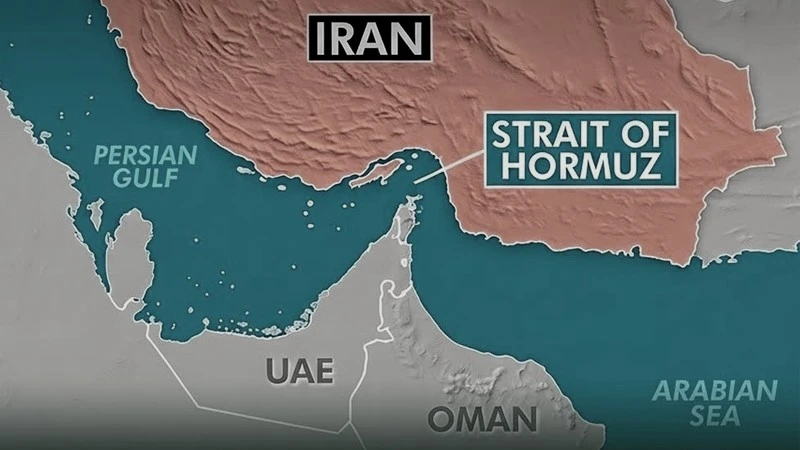
Iran, Oman and the U.S. are reportedly close to a Strait of Hormuz agreement tha...
.jpeg)
Fresh U.S. airstrikes in Iran reportedly killed 14 people, prompting Iranian ret...

President Donald Trump claimed he is Iran’s “No. 1 target” after security measur...
.jpeg)
Three people were killed in U.S. strikes in western Iran as tensions escalated f...

President Donald Trump said the Iran ceasefire is “over” following fresh U.S. st...