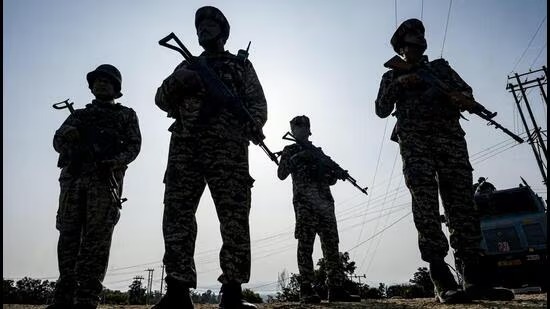
Desk Correspondent , New Delhi — In the wake of Operation Sindoor, a high-intensity 88-hour military engagement with Pakistan, India has launched a comprehensive restructuring of its national air defense architecture and airport security protocols. The conflict, which erupted in May 2025 following a terror attack in Pahalgam, saw Pakistan launch relentless waves of armed drones and loitering munitions targeting Indian airfields from Srinagar to Bhuj. While Indian forces successfully neutralized the threats—ensuring no runways or hangars were hit—the encounter exposed critical vulnerabilities in civilian and military infrastructure. Senior government officials stated that the brief but intense war provided a glimpse into the future of "drone-led" warfare, prompting an immediate shift toward securing airports as frontline military targets.
The strategic response over the past year has seen the Ministry of Home Affairs and the Ministry of Defence install advanced anti-drone systems and electronic jammers at all vulnerable airports across the country. A major component of this overhaul includes the construction of specialized blast-proof bunkers near airports for personnel and assets, a feature previously reserved only for border regions. Furthermore, the conflict necessitated an unprecedented synergy between the Indian Army and paramilitary forces. To date, nearly 490 Quick Reaction Team (QRT) commandos from the Central Industrial Security Force (CISF) have undergone rigorous training at par with National Security Guard (NSG) standards, specifically focused on neutralizing hostile aerial platforms and managing modern combat scenarios in civilian-dense aviation hubs.
Military leadership highlighted the operation's success, confirming that Indian strikes decimated nine terror camps and neutralized over 100 terrorists, while simultaneously striking 11 Pakistani airfields and destroying 13 aircraft. Air Marshal Awadhesh Kumar Bharti noted that the 88-hour window validated India's "Atmanirbhar" (self-reliant) defense capabilities, utilizing indigenous BrahMos missiles and long-range air defense systems to deter aggression. Beyond immediate defense, the government is now fast-tracking the creation of underground command and control centers and expanding domestic production capacity for precision weapons. This strategic reset aims to ensure that India remains prepared for a multi-front conflict, with a long-term goal of maintaining sufficient ammunition and drone stockpiles for at least 60 days of intense warfare.

SBI to Charge ₹15 for Cash Withdrawals Beyond Four Transactions from October 1

Champat Rai Questions Nripendra Misra, Releases 9-Page Statement

Meta Removes Illegal CSAM Accounts Following Government Action

Mukesh Khanna’s call to replace “Jana Gana Mana” with “Vande Mataram” has sparked debate over India’s national symbols and the history behind them.


Iran, Oman and the U.S. are reportedly close to a Strait of Hormuz agreement tha...
.jpeg)
Fresh U.S. airstrikes in Iran reportedly killed 14 people, prompting Iranian ret...
President Donald Trump claimed he is Iran’s “No. 1 target” after security measur...
.jpeg)
Three people were killed in U.S. strikes in western Iran as tensions escalated f...

President Donald Trump said the Iran ceasefire is “over” following fresh U.S. st...