.jpg)
"Earth in Transition: The Story of a Changing Climate"
THE IMPACT
The Carbon in Everything
Swapna Kumbar , Bengaluru - Take a breath. The air entering your lungs right now contains approximately 420 molecules of CO₂ for every million molecules of air. That ratio, 420 parts per million is higher than it has been at any point in the last 3 million years, and it is higher today than it was yesterday, and higher yesterday than the day before. Now look around wherever you are reading this. The chair you are sitting on, the electricity powering your screen, the food you ate this morning, the clothes on your body, the building sheltering you every single one of these things has a carbon cost. Not a metaphorical one. A measurable, physical quantity of CO₂ and other greenhouse gases that was emitted into the atmosphere in the process of making, transporting, powering, or growing that thing. This is not said to induce guilt. It is said to establish a fact: climate change is not something happening out there, in distant power stations and foreign factories. It is woven into the texture of modern daily life, invisibly but inescapably. Understanding how which human activities drive warming, through which mechanisms, at what scale is the only foundation for meaningful action.
The Past: How We Understood the Human Climate Connection
The greenhouse effect has been understood for over 150 years. In 1824, Joseph Fourier suggested the atmosphere traps heat like a blanket. In 1856, Eunice Newton Foote showed that CO₂ absorbs more heat than air. In 1859, John Tyndall confirmed that CO₂ and water vapor trap heat. In 1896, Svante Arrhenius calculated that doubling CO₂ could significantly raise global temperatures.
In 1958, Charles David Keeling began tracking atmospheric CO₂, clearly showing its steady rise. By the late 20th century, scientific agreement was strong, with organizations like the Intergovernmental Panel on Climate Change providing detailed climate assessments.
Long before industrial emissions, human activity was altering the carbon cycle through land use. The clearing of forests for agriculture which began roughly 8,000 years ago and accelerated with the growth of civilizations released carbon stored in trees and soil into the atmosphere. Some researchers argue that early agricultural land clearing actually began a very slow, gradual rise in CO₂ thousands of years before industrialization, potentially preventing a natural cooling that Milankovitch cycles would otherwise have triggered. This pre industrial land use change was modest in its atmospheric impact compared to what followed. But it established the pattern: human civilization has always altered its environment, and the atmosphere has always recorded those alterations.
The Present :The Full Anatomy of Human Climate Impact
Climate change isn’t driven by Carbon dioxide alone. It’s the biggest contributor (~76%), mainly from burning fossil fuels, and it stays in the atmosphere for centuries, making its impact long-lasting.
Methane (~16%) is far more potent in the short term about 80× stronger than CO₂ over 20 years but lasts about a decade. It comes from livestock, rice farming, landfills, coal mining, and gas leaks.
Nitrous oxide (~6%) is 265× more powerful than CO₂ over 100 years, mainly released from fertilizers and livestock waste.
Fluorinated gases (~2%) are entirely human-made, extremely potent (thousands of times stronger than CO₂), and can last thousands of years.
Deforestation is a major hidden driver. Forests store massive amounts of carbon, but when cleared, that carbon is released. Tropical deforestation alone contributes about 10–15% of global emissions, and regions like the Amazon rainforest risk shifting from carbon sinks to sources. Forests also regulate rainfall, so their loss can trigger long-term climate instability.
Urbanization adds another layer. Cities concentrate energy use, increase heat through the urban heat island effect, and depend heavily on transport and construction. Materials like cement and steel are highly carbon-intensive, with cement alone contributing about 8% of global CO₂ emissions.
The Future: Individual Action in a Systemic Problem
At some point in any climate conversation, the individual question arises: What can I actually do? And close behind it, the cynicism: Does it even matter what I do, when corporations and governments are responsible for the vast majority of emissions?
The idea that individuals alone can solve climate change is misleading. A 2013 analysis by the Carbon Disclosure Project found that just 100 companies caused 71% of emissions since 1988. Even the idea of a “personal carbon footprint” was popularized by BP to shift attention away from corporate responsibility. Real change depends on policies like clean energy laws, infrastructure, and global agreements such as the Paris Agreement. Still, individual actions matter because they shape demand and culture. The biggest personal impacts come from diet (especially reducing beef), flying less, using cleaner transport, and lowering home energy use. But the scale of the problem is huge. For example, India emits about 3.3 billion tonnes of CO₂ annually, and global targets require emissions cuts of around 45% by 2030. That level of change can’t come from personal choices alone it needs systemic transformation.
The key takeaway: both matter. Personal choices build momentum, but real impact comes when individuals also engage politically, economically, and socially to push for large scale change.

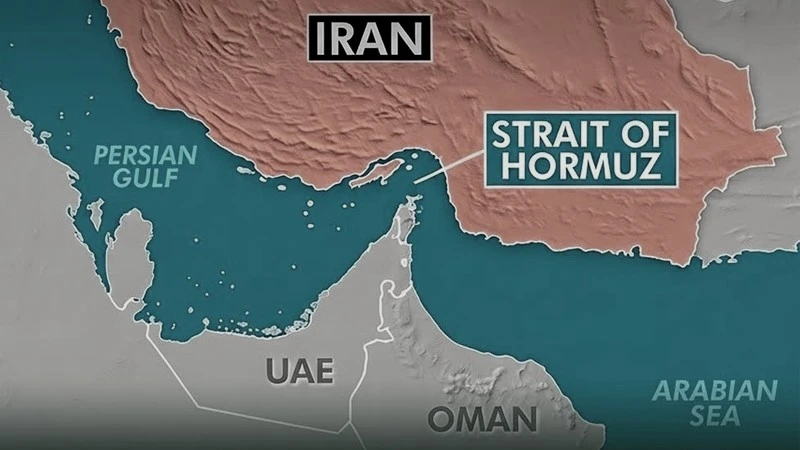
Iran, Oman and the U.S. are reportedly close to a Strait of Hormuz agreement tha...
.jpeg)
Fresh U.S. airstrikes in Iran reportedly killed 14 people, prompting Iranian ret...

President Donald Trump claimed he is Iran’s “No. 1 target” after security measur...
.jpeg)
Three people were killed in U.S. strikes in western Iran as tensions escalated f...

President Donald Trump said the Iran ceasefire is “over” following fresh U.S. st...